Everything Falls Apart Before It Comes Together: Surviving the Ugly Middle of Any Creative Project

You were on a roll. The concept felt fresh, the early sketches had energy, and you were genuinely excited to see where things were going. Then something shifted. Somewhere between the spark and the finish line, your project started feeling clunky, overworked, and frankly kind of embarrassing. The thing you're making now looks worse than the rough draft you had two weeks ago.
Welcome to the messy middle. Population: every creative who's ever made anything worth making.
This phase doesn't get talked about enough, probably because it feels too vulnerable to admit. But creative regression — that disorienting stretch where your work seems to backslide before it moves forward — is one of the most reliable signs that you're actually growing. The trick is learning to recognize it for what it is instead of treating it like a reason to quit.
Why Your Brain Thinks You're Failing (When You're Not)
Here's what's actually happening when your project hits that weird, murky middle zone: your taste is outpacing your execution.
This idea was famously articulated by Ira Glass, who described a gap between the good taste that drew you to a creative field and the technical ability you haven't fully developed yet. But this gap doesn't just show up at the beginning of your career — it resurfaces every single time you attempt something more ambitious than what you've done before.
When you started your current project, you were working within your comfort zone. The early stuff felt good because you were operating on instinct and momentum. But as the work deepened, you started making more deliberate choices, layering in complexity, pushing past your usual moves. Now you can see the distance between what you're making and what you want it to be — and that gap feels enormous.
That visibility is uncomfortable. But it's also evidence that you're operating at a higher level of awareness than you were before. You can't close a gap you can't see.
The Difference Between Productive Struggle and a Genuine Dead End
Not all creative chaos is created equal. There's a meaningful difference between the discomfort of growth and the signal that something is fundamentally broken — and learning to tell them apart will save you a lot of wasted energy.
Productive struggle usually looks like this:
- You know something isn't working, but you can articulate what feels off
- The core concept still excites you even when the execution frustrates you
- You're making decisions, even bad ones — the project is still moving
- The work feels cluttered or overworked, not hollow
A genuine dead end tends to look more like this:
- You can't explain what's wrong — it just feels wrong at a fundamental level
- The original concept no longer interests you and hasn't for a while
- You're avoiding the project entirely rather than wrestling with it
- Every solution you try creates two new problems without resolving the original one
If you're in productive struggle territory, the answer is almost never to abandon ship. It's to keep going with better tools. If you're staring down a genuine dead end, the most creative thing you can do is make a clean break and take what you've learned into something new.
How to Actually Push Through Without Losing Your Mind
Step Away From the Work — But Set a Timer
Distance is a legitimate creative strategy, not a cop-out. When you've been staring at something for too long, your brain stops seeing it clearly and starts seeing only your anxiety about it. Stepping away for a defined period — a day, a weekend, even just a few hours — lets your nervous system reset and your eyes get fresh.
The key word here is defined. Give yourself permission to step back, but set a specific time to return. Open-ended breaks have a way of becoming permanent avoidance.
Make Something Deliberately Bad
One of the sneakiest things the messy middle does is make you precious about your choices. You've invested so much that every decision feels high-stakes, which locks you up creatively. Break that spell by making something you have zero intention of keeping.
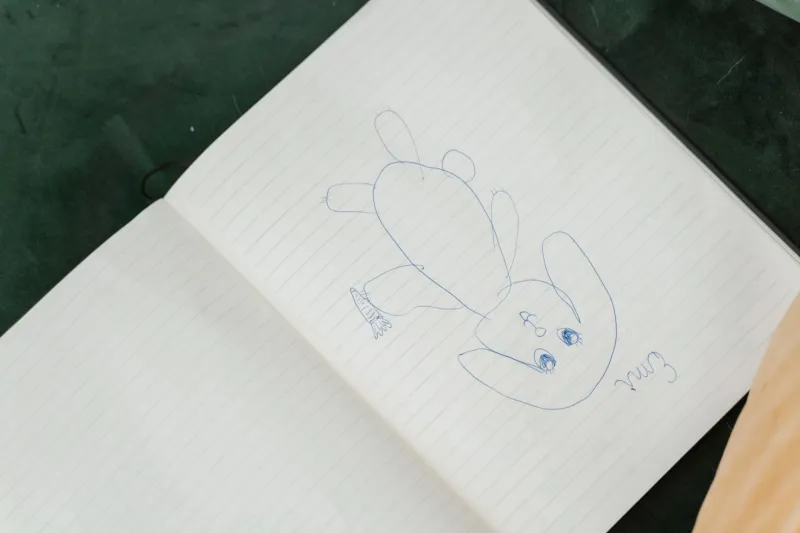
Do a version of your layout in the ugliest colors you can think of. Sketch the concept as a five-year-old would. Write the copy as if it were a parody. This sounds absurd, but it works — giving yourself explicit permission to fail badly loosens the grip of perfectionism and often shakes loose ideas you wouldn't have found otherwise.
Go Back to Your Original Brief
When work gets complicated, creatives have a tendency to drift from the original intent without noticing. Pull up whatever you wrote down when you first conceived the project — your initial notes, a mood board, a voice memo, a napkin sketch. Ask yourself honestly: does what you're building right now still serve that original vision? Sometimes the messy middle is happening because you've wandered off course without realizing it.
Talk It Out With Someone Who Isn't Invested
Explaining your project out loud to someone who has no stake in it is one of the most underrated diagnostic tools in any creative's toolkit. You don't need feedback, necessarily — you just need to hear yourself describe what you're making and what's not working. More often than not, the act of articulating the problem out loud is what reveals the solution.
The Thing Nobody Tells You About Creative Confidence
Here's the uncomfortable truth about confidence in creative work: it doesn't come from avoiding the messy middle. It comes from surviving it, repeatedly, until you start to recognize the pattern.
Every time you push through that bewildering phase where everything feels clunkier and more confused than when you started, you're building a body of evidence that you can trust yourself to come out the other side. That evidence compounds. After enough cycles, you stop panicking when the work goes sideways — not because it stops happening, but because you know from experience that it's part of the process, not the end of the road.
The creatives who consistently make their best work aren't the ones who never hit the wall. They're the ones who've hit it enough times to stop mistaking it for a full stop.
You're Not Losing the Plot — You're Writing the Hard Part
Every project has an easy beginning, a brutal middle, and a finish line that feels impossible until it suddenly isn't. The middle is where most people give up, which is exactly why finishing anything puts you in rare company.
Your work looks worse right now because you're in the middle of making it better. That's not a crisis. That's just the shape of how creative things get made.
Keep going. The other side of the messy middle is where the good stuff lives.