Book the Court, Clear the Mind: What Badminton Booking Can Teach You About Good Design
Let's address the elephant on the court: you searched for badminton booking, and you landed on a creative design site. Weird? Maybe. But stay with me for a second, because I promise there's a reason this makes sense.
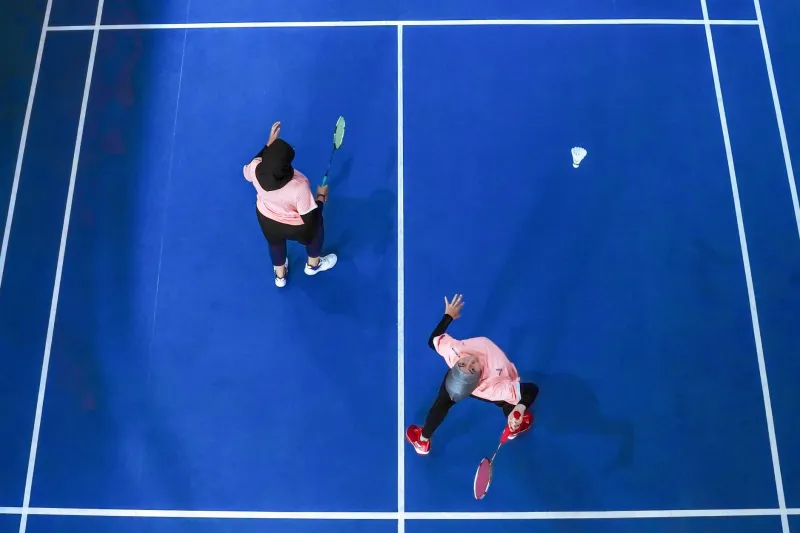
Badminton has quietly exploded in the US over the past few years. Community gyms, rec centers, and dedicated clubs from Seattle to Atlanta are packed with players chasing that satisfying thwack of a shuttlecock. And every single one of those players has interacted with the same thing: a booking system. Some are beautiful. Most are... not. And the difference between the two is a crash course in design theory that applies to everything we make here at Figure Playground.
The Booking Flow Is a Design Portfolio in Disguise
Think about what a court booking actually asks of a person. Pick a date. Pick a time. Pick a court. Pay. Confirm. That's it. Four or five steps. And yet, how many times have you abandoned a reservation because the calendar wouldn't load, the time slots were confusing, or the checkout demanded an account you didn't want to create?
Every booking screen is a tiny UX laboratory. The good ones understand something designers talk about all the time: friction is the enemy of intention. You showed up wanting to play badminton. Every extra tap, every ambiguous button, every "please verify your email" stands between that intention and the thing you actually came to do.
Sound familiar? It should. It's the same reason your portfolio site needs a clear call to action, the same reason your app's onboarding can't be a seven-screen maze. The user came for the game, not the paperwork.
Defaults Do the Heavy Lifting
Here's a design lesson hiding in every reservation system: the default option wins. If the booking app pre-selects the most popular time slot, most people go with it. If it suggests booking the same court you reserved last week, most people tap "confirm" and move on with their lives.
Designers call this choice architecture, and it's one of the most powerful — and most underused — tools in creative work. When you're designing an interface, a landing page, or even a zine layout, you're not just presenting options. You're deciding what the path of least resistance looks like.
The best booking systems I've used (shoutout to the ones that remember I always play Tuesday evenings) feel less like forms and more like a friend holding the door open. That's the bar. Can your design feel like a friend holding the door?
Constraints Make the Game
Badminton itself is a design lesson. You've got a racket, a shuttle, a net, and lines on the floor. That's it. No equipment upgrades, no infinite settings, no subscription tiers. The constraint is the game.
Now compare that to the software you use every day. How many of us have opened a design tool with 400 menu options and just... frozen? The court doesn't have that problem. You show up, you play, you sweat, you go home happy.
When you're stuck on a creative project, try borrowing the badminton model. Give yourself a court: one canvas size, two colors, one hour, one tool. Constraints aren't the opposite of creativity — they're the net that makes the rally possible.
The Real Point: Show Up, Then Figure It Out
There's one more thing badminton booking gets right, when it's done well: it converts a vague desire ("I should be more active" or "I miss playing") into a concrete commitment ("Tuesday, 7 PM, Court 3"). That's the whole magic trick.
Creativity works the same way. "I want to illustrate more" is a wish. "Saturday morning, 9 AM, kitchen table, sketchbook open" is a booking. The people who make things consistently aren't necessarily more talented — they've just learned to reserve the court in advance and treat it as non-negotiable.
So here's your homework, whether you came for badminton or for design inspiration: book your creative court this week. Put it on the calendar like it's a paid reservation, because in a way, it is. Your future self — the one with the finished project — already put down the deposit.
And if you run a rec center or a club and you're reading this? Please, for the love of all things good, invest in a decent booking flow. Your players — and their design-savvy friends — will thank you.
Now if you'll excuse me, I have a court to reserve and a sketchbook that's been waiting all week.