Boxed In and Breaking Through: The Hidden Power of Creative Limits
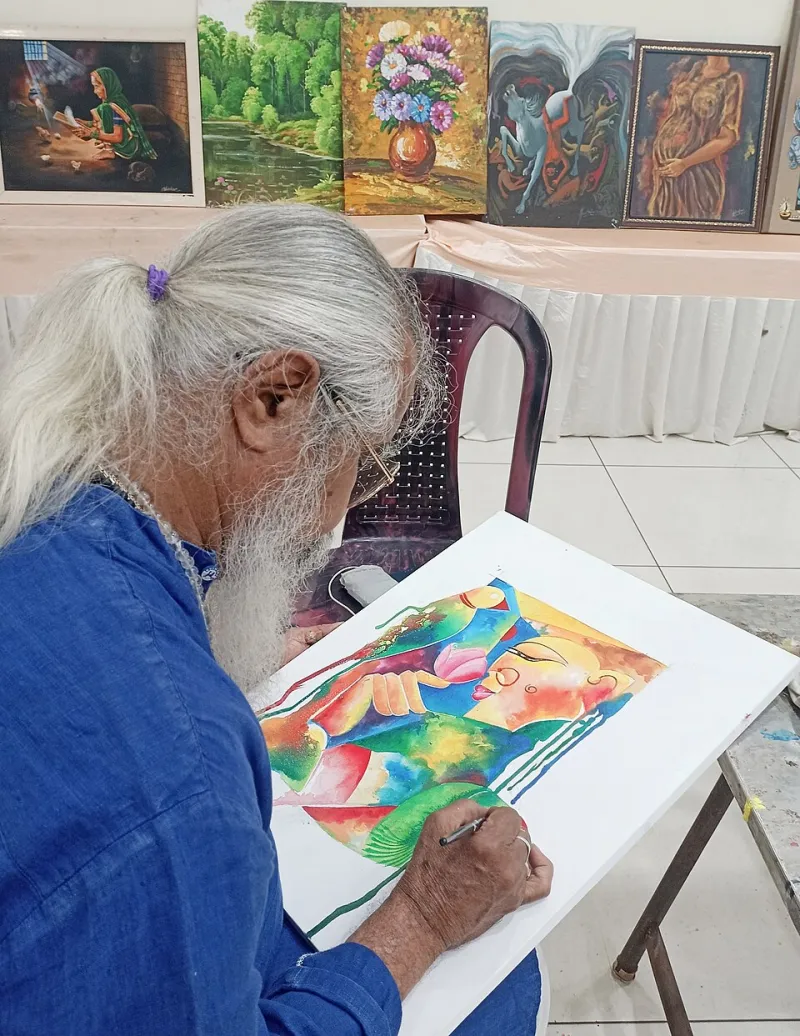
Photo: Kalasagary, CC BY-SA 4.0, via Wikimedia Commons
There's a certain kind of creative paralysis that hits when you have everything. Every font. Every color. Every plugin, preset, and premium asset pack your subscription can throw at you. The canvas is infinite, the palette is unlimited, and somehow — somehow — you sit there staring at a blank screen for two hours producing absolutely nothing.
Now imagine someone hands you three crayons and a paper bag and says, make something beautiful.
Weird thing? You probably would.
This isn't just a cute thought experiment. It's a documented psychological phenomenon, and it's reshaping the way some of the most interesting designers and illustrators in the US are approaching their work.
Why Too Much Freedom Is Actually Terrifying
Psychologists call it the paradox of choice — the more options we have, the harder it becomes to commit to any single one. Barry Schwartz popularized the concept in his 2004 book, but designers have been living it for decades without a name for it. When everything is possible, nothing feels necessary. And without necessity, creative urgency dies.
Constraints flip that equation. When you can't use a third color, you stop debating which third color to pick and start figuring out how to make two colors do the work of twelve. When you only have an afternoon, you stop perfecting and start deciding. The limitation forces a commitment that unlimited freedom never demands.
Neuroscience backs this up in a pretty satisfying way. Research on prefrontal cortex activity suggests that our brains actually work more efficiently under moderate pressure and restriction. Constraints narrow the decision space, which reduces cognitive load and frees up mental bandwidth for actual creative problem-solving rather than option-weighing. You're not thinking less — you're thinking better.
Real Designers, Real Restrictions
Talk to working creatives long enough and you'll hear some version of this story over and over.
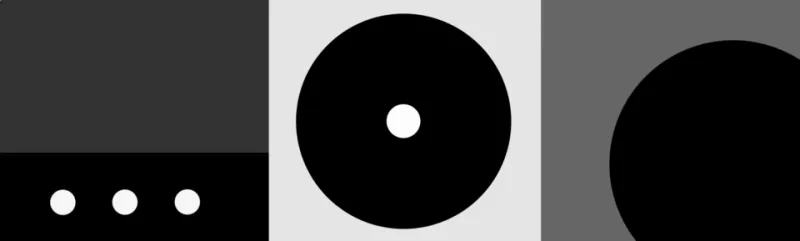
Take Mara, a brand identity designer based in Portland who spent years building out an enormous digital toolkit. "I had every resource imaginable and my work was getting more generic by the month," she says. "Everything looked polished but nothing looked like me." On a whim, she challenged herself to design an entire brand system using only two typefaces and a black-and-white palette. The result landed her a feature in a national design publication and three new client inquiries in a week.
"The constraint made me think about shape and space in ways I'd been ignoring for years," she explains. "I couldn't lean on color to create hierarchy, so I had to actually understand hierarchy."
Then there's Damon, an illustrator in Chicago who works primarily in editorial. Frustrated with what he called "style drift" — the tendency to slowly absorb every trend he saw on social media — he imposed a medium restriction on himself for an entire month. Traditional ink only. No digital touch-ups, no undo button, no layers. "I made a lot of bad drawings," he laughs. "But I also made the best three pieces of my career. The permanence of ink forces you to mean every mark."
These aren't isolated stories. They're a pattern.
The Shapes Constraints Take
Constraints don't all look the same, and the most useful ones are usually the ones that target whatever you personally over-rely on. Here are the main categories worth experimenting with:
Tool constraints limit what you can physically use — one brush, one typeface, one medium. These work especially well for people who tend to collect resources without actually developing mastery of any of them.
Time constraints compress your working window. A two-hour deadline doesn't give you the luxury of second-guessing. Designers who use timed sprints often report that the work they produce in an hour of focused urgency beats what they'd spend three days refining.
Color constraints are particularly powerful in visual design. Restricting yourself to a monochromatic palette, or committing to a specific era's color sensibility (think 1970s muted earth tones or 1990s neon primaries), forces compositional and structural thinking that color can otherwise mask.
Conceptual constraints are more abstract — committing to a single metaphor, a specific emotional tone, or a rule like "every element must touch at least one other element." These push against the tendency to throw everything at a piece hoping something sticks.
Exercises to Try Right Now
You don't need a client project or a formal challenge to start experimenting with this. Here are a few constraint-based exercises you can run on your own work this week:
The Three-Color Challenge. Pick any current project — or start a new personal one — and allow yourself exactly three colors. Not a palette of three with unlimited tints and shades. Three. Watch how quickly your decisions become intentional.
The 45-Minute Sprint. Set a timer for 45 minutes and design or illustrate something start-to-finish before it goes off. Don't open it afterward to refine. Evaluate it as-is. You'll likely surprise yourself with how resolved the work feels under pressure.
The Analog Day. Spend one full creative session working with physical materials only. Pen, paper, cut-and-paste collage, paint — whatever you have around. No screens in the creation process. The friction is the point.
The One-Font Rule. For a week, use a single typeface across everything you design. Every weight, every size, every application. It sounds boring. It is, briefly. Then it becomes a masterclass in typographic thinking.
Constraints as Creative Identity
Here's the part that doesn't get talked about enough: constraints don't just improve individual pieces. Over time, they shape a recognizable voice.
Some of the most iconic visual identities in design history came from someone working within — or deliberately returning to — significant limitations. Think about how much of mid-century American graphic design was shaped by the constraints of two-color printing. Or how the lo-fi aesthetic of early zine culture became a full-blown visual language precisely because it leaned into the limits of photocopiers and manual paste-up.
When you consistently make creative decisions within a defined set of rules, you develop instincts. Those instincts become style. That style becomes the thing people recognize as distinctly yours.
So yeah — box yourself in. It might be the most freeing thing you ever do.