Your Brain Goes Rogue When You Stop Paying Attention — Here's How to Use That

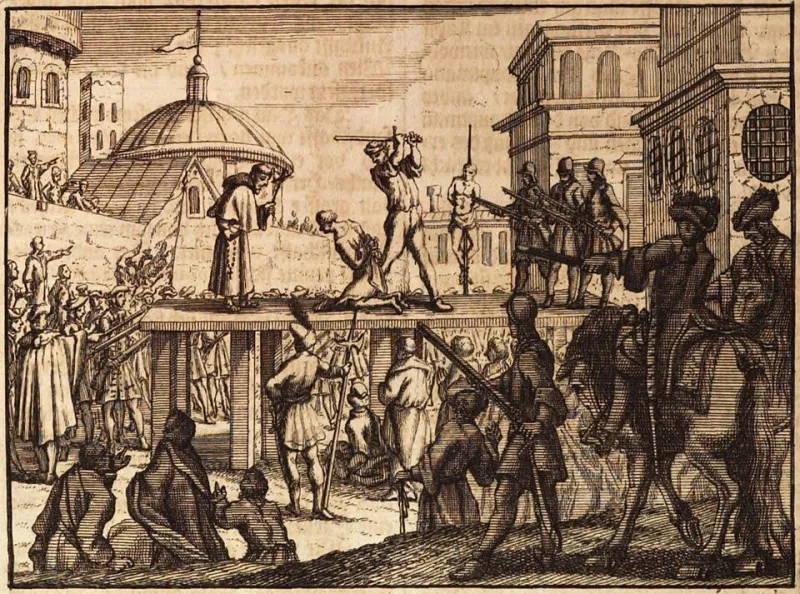
Photo: Daniel Hernández Morillo, Public domain, via Wikimedia Commons
You're not imagining it. That moment in the shower when the perfect color palette clicks into place, or the walk to the coffee shop where you suddenly figure out your logo composition — it's real, it's repeatable, and it has a name.
Neuroscientists call it the Default Mode Network, or DMN. And if you're a designer, illustrator, or really anyone who makes things for a living, understanding how it works might be the most useful thing you do this week.
What's Actually Happening Inside Your Head
Here's the short version: your brain runs two major operating modes. The first is your task-positive network — the focused, deliberate, problem-solving mode you're in when you're actively working. The second is the DMN, which lights up when you're not actively doing anything in particular. Daydreaming, showering, folding laundry, zoning out on a long drive.
For a long time, researchers thought the DMN was basically your brain idling. Turns out, it's anything but. When your task-positive network steps back, your DMN starts making connections between ideas that don't usually sit next to each other. It digs through memory, shuffles associations, and surfaces combinations your conscious mind would never deliberately pursue.
In other words, it's doing creative work. Just without your permission.
This is why shower thoughts feel so weirdly profound. You're not distracted — you're available. The warm water, the repetitive motion, the absence of screens or deadlines — all of it creates the perfect low-stimulation environment for your DMN to do its thing.
Why Trying Too Hard Is the Problem
Here's where it gets a little uncomfortable for the hustle-culture crowd: intense focus can actually block creative insight.
When you're in deep concentration mode — grinding through a brief, forcing yourself to iterate — your brain is great at executing on existing frameworks. But it's not great at leaping sideways into something genuinely new. That requires a kind of loose, associative thinking that focused attention suppresses.
Researchers at UC Santa Barbara found that mind-wandering during a task actually improved performance on creative problem-solving tests afterward. Not despite the distraction — because of it. The mental drift gave subjects' brains room to make unexpected connections.
For creatives, this reframes the whole guilt spiral around "unproductive" time. Staring out the window isn't laziness. It might be the most important part of your process.
The Capture Problem (And Why Most Creatives Fail Here)
So here's the frustrating part. Your DMN is generous. It hands you ideas constantly — in the shower, during your morning run, right as you're falling asleep. But it doesn't care whether you remember them.
Most of us have lost more good ideas than we've ever kept. You think you'll remember the concept when you get to your desk. You won't. The specificity fades within minutes.
The fix is embarrassingly simple: lower the friction between the idea and the record. That means:
- A waterproof notepad in the shower. Yes, they exist. AquaNotes is a popular one and runs about ten bucks. Slightly ridiculous. Absolutely worth it.
- Voice memos the second you're out. Don't dry off first. Don't check your phone. Just hit record and ramble. Even a half-formed idea spoken out loud gives you something to work with later.
- A single dedicated capture notebook. Not your sketchbook, not a random sticky note. One place where shower thoughts, walk thoughts, and half-asleep thoughts all land. Review it weekly.
The goal isn't organization — it's just not losing the stuff.
How to Engineer More of These Moments
You can't manufacture inspiration. But you can create conditions that make it more likely to show up.
Build transition rituals. The shower works partly because it bookends your day — it's a transition between sleep and activity. Other transitions carry the same potential. A short walk before you start a project. A ten-minute stretch between design sessions. These aren't warm-ups; they're DMN on-ramps.
Try strategic boredom. This one's counterintuitive, but hear it out. Deliberately doing something unstimulating — dishes, a slow walk without headphones, sitting in a park — creates the low-input environment your DMN loves. No podcast. No music. Just you and whatever your brain decides to do.
Sleep on it. Literally. The hypnagogic state — that fuzzy in-between zone as you're falling asleep — is one of the richest creative environments your brain produces. Thomas Edison famously napped in a chair holding steel balls so they'd clatter and wake him at that exact moment. He wanted to catch what his drifting mind was generating. Keep a notepad on your nightstand.
Work in cycles, not sprints. Instead of pushing through a three-hour creative session, try 45-minute focused blocks followed by 10-15 minutes of deliberately low-stimulation activity. You're essentially cycling between your task-positive network and your DMN, letting each do what it does best.
What This Means for Your Creative Practice
There's a bigger reframe hiding inside all of this. We tend to think of creative work as the time we spend actively making things. Sketching, iterating, building. But if the DMN research is right, a huge portion of the actual creative thinking happens in the spaces between.
The blank canvas isn't where the idea lives. It's where you execute on an idea that already happened — probably while you were doing something completely unrelated.
That shifts the question from "how do I get inspired?" to "how do I build a life with enough open space for my brain to wander?" For designers and artists working in deadline-driven environments, that's not a small ask. But it might be the most important structural change you make.
Protect the boring moments. Stop filling every gap with content. Let your brain go rogue.
The good stuff is in there. It just needs a little silence to find its way out.