Two Brains Are Better Than One — Even When You're Working Alone
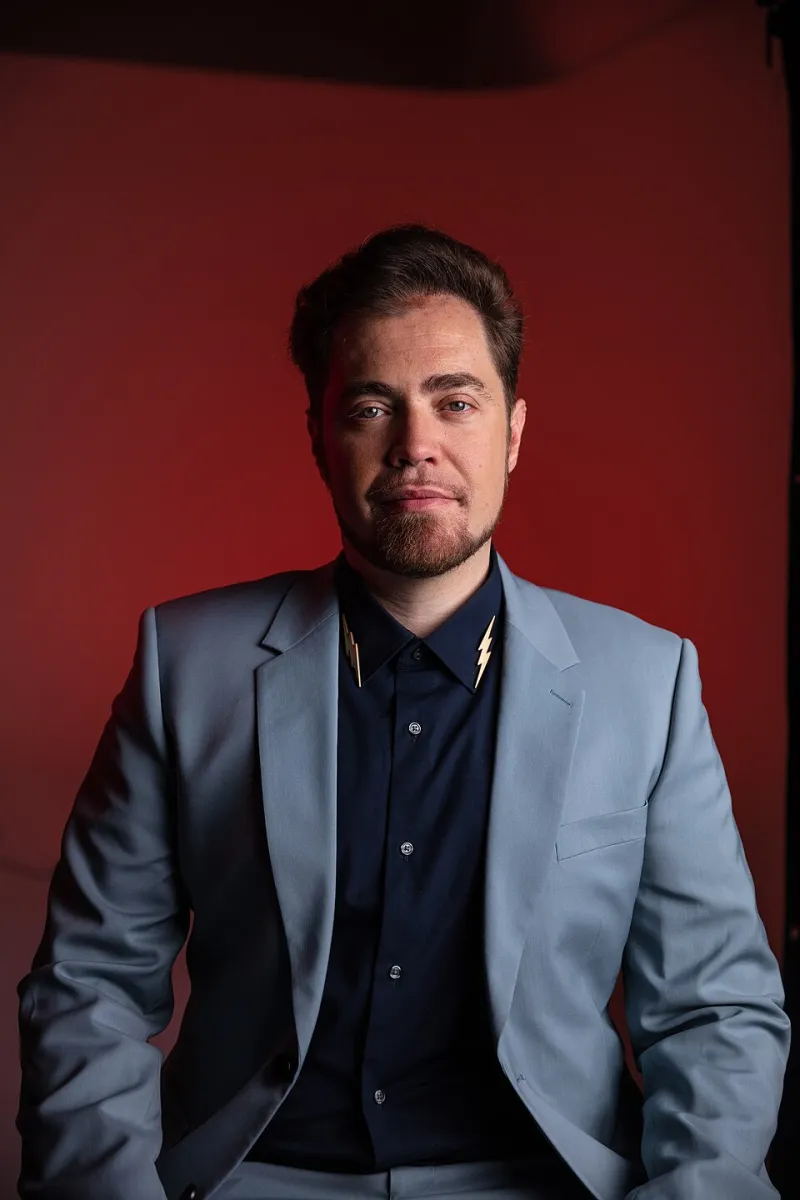
Photo: Floweroflife13, CC BY-SA 4.0, via Wikimedia Commons
There's a romantic image that follows creative people around like a shadow — the lone genius, hunched over a sketchbook at 2 a.m., pulling something brilliant out of thin air. No committees. No compromise. Just pure, unfiltered vision.
It's a compelling story. It's also kind of a trap.
Here at Figure Playground, we spend a lot of time thinking about how creativity actually works — not how we wish it worked, but the messy, real-world mechanics of making things. And one of the most counterintuitive patterns we keep running into? The artists with the sharpest individual voices are often the ones who collaborate the most.
Let that sit for a second.
The Mirror Effect You Didn't Know You Needed
When you work alone, your assumptions go unchallenged. That's sometimes useful — nobody's slowing you down, nobody's second-guessing your choices. But it also means you can drift without realizing it. Your habits calcify. Your comfort zones start to feel like creative identity.
Collaboration breaks that spell fast.
The moment another person enters your creative process — even briefly, even informally — you're suddenly forced to articulate things you've always left unspoken. Why did you choose that typeface? Why does that composition feel right? Why are you so weirdly attached to that particular shade of burnt orange?
Trying to explain your instincts to someone else is one of the fastest ways to understand them yourself. It's like holding your own work up to a mirror you didn't know existed.
Illustrators who've done collaborative zine projects often describe the experience the same way: they go in thinking they'll learn from their collaborator, and they come out having learned more about themselves. Working alongside someone with a completely different visual language forces you to identify what your visual language actually is.
Creative Friction Is a Feature, Not a Bug
Here's the part that makes a lot of solo artists nervous: collaboration involves friction. Someone will push back on your idea. Someone will take the project somewhere you didn't expect. Someone will, at some point, be wrong about something in a way that kind of drives you crazy.
Good. That friction is doing something.
When your ideas get challenged, you have two choices: defend them or abandon them. Both outcomes are valuable. If you defend an idea and win the argument, you've just discovered something you actually believe in — and that belief will show up in your solo work with more conviction. If you abandon the idea because the challenge revealed a weakness, you've just upgraded your instincts.
Either way, you leave the collaboration sharper.
Designers who work on brand identity projects with cross-functional teams — strategists, copywriters, marketers — often note that the pushback they receive from non-designers actually makes their design thinking stronger. They have to defend the why behind every visual choice, which forces a level of intentionality that pure solo work doesn't always demand.
Low-Commitment Collaboration: A Framework for Busy Creatives
The biggest obstacle most solo artists cite isn't desire — it's logistics. Full-scale collaborations take time, coordination, and emotional bandwidth that not everyone has in abundance. But here's the thing: collaboration doesn't have to be a big production to be effective.
Here are a few lightweight formats worth trying:
The 30-Minute Swap Find one other creative — a friend, a colleague, someone from an online community — and agree to spend 30 minutes working on each other's current project. Not to take it over, just to add one idea, one sketch, one suggestion. Then swap back. You'll be surprised how much a single outside touch can illuminate your own direction.
The Accountability Pair This one's less about making things together and more about making things alongside each other. Pick a creative partner and check in weekly — share what you're working on, what's feeling stuck, what you're excited about. The act of narrating your process to someone else trains you to be more conscious of your own creative choices.
The Micro-Brief Exchange Write a short creative brief — a constraint, a prompt, a visual problem — and hand it to another creative to interpret. They do the same for you. No collaboration on the actual execution, just the setup. Seeing how someone else responds to a prompt you designed (and vice versa) is endlessly revealing about how different creative minds organize around the same challenge.
The Public Sketchbook This one's digital. Share your in-progress work in a community space — a Discord server, an Instagram story, a Behance WIP post — and invite low-stakes feedback. You're not looking for approval. You're looking for the question that makes you go huh, I never thought about it that way.
What Collaboration Teaches You About Your Own Defaults
Every creative has defaults — the moves they make automatically, the solutions they reach for first. Defaults aren't bad. They're often where your genuine style lives. But you can't evolve what you can't see.
Collaboration makes your defaults visible.
When you're working with someone else and you notice yourself resisting a direction, that resistance is information. When you find yourself consistently steering a project toward the same aesthetic territory regardless of the brief, that's information too. When you realize your collaborator never would have thought to do the thing that came naturally to you — that's the clearest signal of all that you have a perspective worth developing.
Solo work is where you execute your vision. Collaboration is where you discover what that vision actually is.
The Paradox, Resolved
So here's the thing about the collaboration paradox: it's only a paradox if you think of collaboration as giving something away. A piece of your control, a piece of your vision, a piece of your creative territory.
But most artists who do it regularly will tell you the opposite is true. Every collaboration they've entered has sent them back to their solo practice with something they didn't have before — a clearer sense of their instincts, a stronger ability to defend their choices, a more precise understanding of the aesthetic decisions that are uniquely theirs.
Working with others doesn't blur your voice. It tunes it.
So the next time you're feeling stuck in your solo work — circling the same ideas, defaulting to the same solutions, wondering why your work feels a little flat — consider the counterintuitive fix. Find someone to make something with, even briefly, even imperfectly.
You might just come back to your own sketchbook knowing exactly who you are.