Cutting It Close: The Weird Science of Why Deadlines Make You a Better Creative
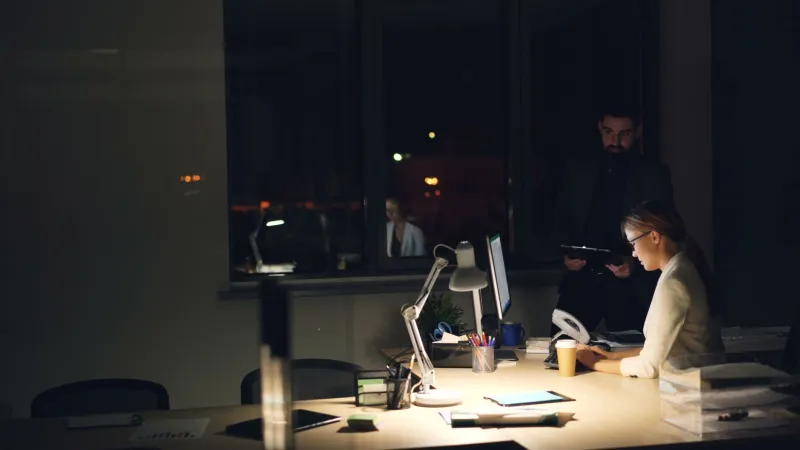
Let's be honest about something most creative professionals don't want to admit out loud: the project you're most proud of probably came together in a rush. Maybe it was a pitch deck assembled the morning of the meeting. Maybe it was a logo concept that cracked open at midnight when the brief was due at 9 AM. You told yourself it was a fluke, a near-miss dressed up as a win. But what if it wasn't a fluke at all?
What if the deadline was the point?
Your Brain on a Clock
Here's where things get interesting. Cognitive psychologists have spent a lot of time studying how time pressure affects performance, and the results are genuinely counterintuitive. Under moderate stress — the kind that comes from a real but manageable deadline — the brain releases norepinephrine, a neurotransmitter that sharpens focus and speeds up processing. It's basically a natural stimulant, and it kicks in hardest when the stakes feel real.
This is sometimes called the Yerkes-Dodson curve, a concept from psychology that maps the relationship between arousal and performance. Too little pressure and you're bored, distracted, scrolling through your phone instead of sketching. Too much pressure and you freeze up completely. But in that sweet spot in the middle — where the deadline is close enough to feel urgent but not so close that it feels impossible — your brain actually performs at a higher level.
For creative work specifically, that window tends to produce leaner, more decisive thinking. When you have six weeks to design something, you can afford to second-guess every choice. When you have six hours, you trust your instincts because there's no other option. And your instincts, it turns out, have been paying attention even when your conscious mind was wandering.
The Incubation Effect (AKA Why You Needed to Procrastinate)
Here's the part that should make every chronic procrastinator feel slightly vindicated. There's solid research behind what's called the incubation effect — the idea that your brain continues working on a creative problem even when you're not consciously focused on it. All those hours you spent "not working" on the project? Your subconscious was running the problem in the background like an open tab you forgot about.
When the deadline finally forces you to sit down and actually produce something, you're not starting from zero. You're harvesting. The ideas that feel like they came out of nowhere at crunch time were actually assembled quietly over days or weeks of passive mental processing. The deadline didn't create the idea — it just forced you to pull it forward.
This is why designers and illustrators often report that their most spontaneous-feeling work is also their strongest. Spontaneity, in many cases, is just incubation finally getting its moment.
When Urgency Becomes a Trap
Before you use this as an excuse to blow off every project timeline until the last possible second, let's get real about the other side of this equation. There's a meaningful difference between productive urgency and full-blown panic, and confusing the two is how creative burnout happens.
Productive urgency feels like focus. It narrows your options, silences your inner critic, and gives you permission to commit. Paralyzing anxiety, on the other hand, floods the brain with cortisol — the stress hormone that's great for running from predators but genuinely terrible for making nuanced creative decisions. When you're in full panic mode, you're not accessing your best instincts. You're just trying to survive the moment.
The difference often comes down to timing and preparation. A deadline that hits when you've done zero groundwork is just a crisis. A deadline that hits when you've been loosely marinating on the problem — even if you haven't formally worked on it — is a launchpad.
Playing the System Without Breaking Yourself
So how do you actually engineer this for yourself, without turning your creative life into a series of white-knuckle finishes?
Front-load the thinking, back-load the making. Give yourself permission to let a brief breathe for a few days before you start producing anything. Sketch loosely. Pull references. Let the problem live in your head without demanding an answer from it. Then, when you sit down to actually create, you've already done the invisible work.
Create artificial deadlines with real consequences. The reason real deadlines work is because something is actually at stake — a client relationship, money, your reputation. You can replicate that pressure by sharing your work-in-progress with someone whose opinion you respect, or by booking a feedback session before you feel ready. External accountability makes internal pressure feel legitimate.
Set a "decision horizon" for yourself. One of the reasons deadlines are so clarifying is that they force you to stop iterating and commit. You can manufacture that effect by setting a hard cutoff for the exploration phase of any project. After that point, you're not generating new ideas — you're executing the best one you've already found.
Know your personal urgency window. Not every creative person responds to deadline pressure the same way. Some people hit their stride 24 hours out. Others need 72. Pay attention to when your best work actually tends to emerge and structure your timeline around that reality instead of pretending you're someone who works steadily from day one.
The Real Lesson Here
Procrastination gets a bad reputation, and honestly, a lot of that reputation is deserved. Chronic avoidance, missed deadlines, and work that never gets finished because conditions were never quite right — none of that is a creative superpower. But the instinct to let an idea develop before forcing it into form? That's not laziness. That's process.
The most interesting thing about deadline-driven creativity isn't that pressure makes you work faster. It's that pressure makes you trust yourself more. It strips away the luxury of endless revision and forces you to stand behind your first strong instinct. And more often than not, that instinct was right all along — it just needed a countdown clock to finally show up.
So the next time you find yourself pulling something together at the last minute and it turns out better than you expected, don't write it off as luck. You were building the whole time. The deadline just told you it was ready.