Opposites Attract (And Then They Make Something Brilliant)
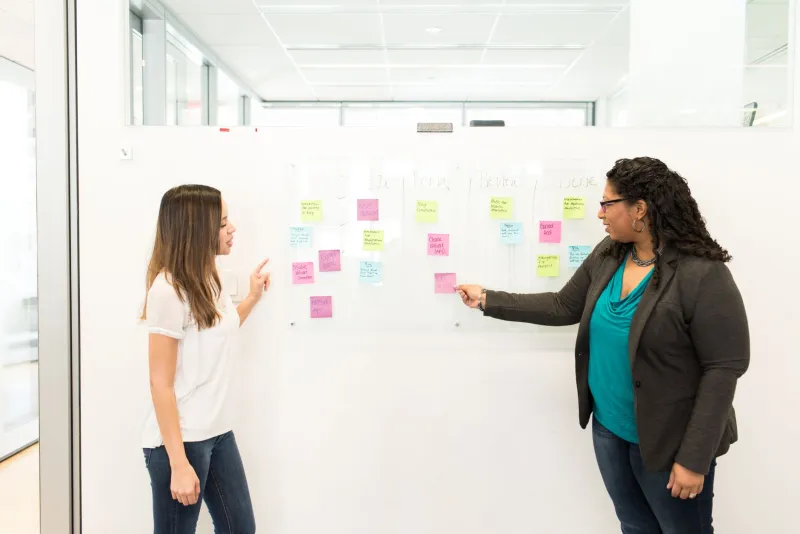
There's a certain kind of creative comfort that feels productive but isn't. You know the vibe — you're deep in a project with someone whose taste mirrors yours, whose references land every time, whose Figma comments are basically compliments. The work flows. Nobody argues. And at the end of it, you've made something that's... fine. Polished, even. But not surprising.
Now think about the last time a project genuinely surprised you. Chances are, someone in the room was pushing back.
The idea that creative friction is a feature rather than a bug isn't new, but it's still wildly underused. Most of us instinctively build teams of people who think like us, work like us, and share our aesthetic sensibilities. It feels efficient. It feels safe. But it's quietly capping your ceiling.
The Echo Chamber Problem in Creative Work
Design studios talk a lot about culture fit, and there's a real reason for that — shared values matter. But culture fit has a shadow side. When everyone in the room has the same visual language, the same influences, and the same definition of "good," you end up iterating inside a closed loop.
This is what researchers call "cognitive entrenchment" — basically, the more expert you become in a specific way of thinking, the harder it gets to see outside it. Senior designers often fall into this trap harder than junior ones, because they've spent years building a refined, internally consistent worldview about what works. That worldview is valuable. It's also a box.
Bringing in someone who doesn't share your frame of reference — a developer who thinks in systems logic, a copywriter who leads with narrative, an illustrator who's never touched a grid — doesn't break your expertise. It exposes its edges. And that's exactly where interesting things happen.
What "Different" Actually Means
When we say "collaborate with people who think differently," it's easy to picture a surface-level version of that — maybe someone from a different department, or a freelancer with a slightly different aesthetic. That's a start, but the real voltage comes from deeper differences.
Think about:
Cognitive style. Some people are divergent thinkers — they generate a hundred ideas and love the mess. Others are convergent — they want to evaluate, narrow, and decide. Put them in a room together without a framework, and it's chaos. Put them together with one, and you get breadth plus discipline.
Domain expertise. The best cross-disciplinary collabs often happen when someone from a completely unrelated field wanders into the conversation. The team at IDEO famously borrowed surgical techniques to rethink product prototyping. The friction between "that's not how design works" and "well, this is how medicine works" cracked something open.
Cultural context. This one's especially relevant for US-based studios working in an increasingly global visual culture. A designer who grew up navigating a completely different visual landscape — different typography traditions, different color associations, different spatial relationships in layout — brings perceptual data you literally don't have.
Risk tolerance. Pairing someone who wants to blow it all up with someone who wants to protect what's working isn't a recipe for disaster. It's a natural tension that, when managed well, keeps ideas from being either too timid or too unmoored.
Making the Friction Work For You
Here's the part nobody talks about enough: productive creative friction doesn't just happen because you hired someone different. It requires some intentional scaffolding.
Separate idea generation from idea evaluation. This is huge. When divergent and convergent thinkers are in the same room doing both at once, the evaluators shut down the generators before ideas have room to breathe. Run your brainstorm first, hold critique for later. Non-negotiable.
Name the difference out loud. If someone keeps pushing toward minimalism and someone else keeps loading in complexity, don't let that become a silent war. Make it explicit. "It sounds like we're working from different assumptions about what the audience needs — can we name those?" That one move transforms a standoff into a design question.
Build a shared language early. Differences in vocabulary can masquerade as differences in values. A developer saying "that's not scalable" might mean something totally different from what a designer hears. Spend time early in a collaboration building a small shared glossary. It sounds tedious. It saves weeks.
Rotate who leads. If the same person is always driving the creative direction, you're not really collaborating — you're assisting. Even on short projects, try explicitly handing the wheel to different people at different stages. The illustrator leads concepting. The UX person leads structure. The brand strategist leads the final edit. Watch how the work shifts.
Real Talk: It's Not Always Comfortable
Let's be honest — collaborating with someone whose instincts are genuinely different from yours can feel bad in the moment. Like, actually uncomfortable. You might feel like your taste is being questioned, or like the project is losing coherence, or like you're speaking different languages and nobody brought a translator.
That discomfort is information. It usually means you're somewhere near the edge of your defaults, which is exactly where new work gets made.
The studios and creative teams that do this well tend to share one trait: they've built enough psychological safety that people can say "I don't understand what you're going for here" without it being a referendum on anyone's talent. That safety doesn't happen automatically. It's cultivated, usually by whoever's leading the collaboration being willing to say it first.
Finding Your Opposite
So where do you actually find these people? A few places worth looking:
- Adjacent communities. If you're a graphic designer, spend time in architecture forums, game design Discord servers, or industrial design meetups. You'll find people whose visual problem-solving is sophisticated but built on completely different foundations.
- Critique groups outside your medium. Join a writing workshop. Go to a ceramics critique. The way people in other disciplines talk about composition, balance, and intention will rewire how you see your own work.
- Your current team, but deeper. Honestly, the person you've been collaborating with for two years might have a wildly different internal creative process than you've ever accessed. Ask them how they actually think through a problem. You might be surprised.
The goal isn't conflict for its own sake. It's range. It's the ability to make work that couldn't have come from just one brain, one background, one way of seeing.
At Figure Playground, we think of creativity as something that takes shape through contact — between ideas, between materials, between people. The most interesting forms usually emerge from pressure. Your next great project might be waiting on the other side of a collaboration that makes you a little uncomfortable.
Go find that person. Hear them out. Make something neither of you could have made alone.