Done Is a Masterpiece: How Letting Go of Perfect Unlocks Your Best Creative Work

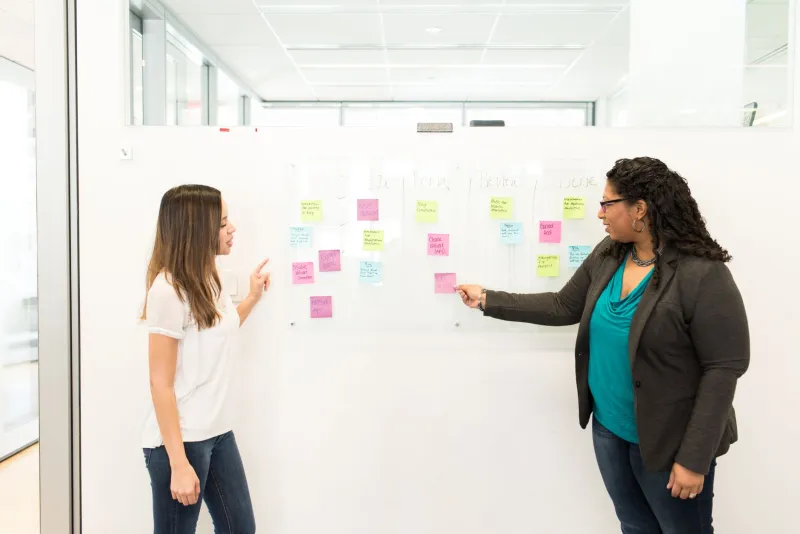
Photo by Photo by Madalyn Cox on Unsplash on Unsplash
Here's a confession most creatives will recognize: the project you agonized over the longest — the one you reworked seventeen times, lost sleep over, nearly scrapped three separate occasions — probably wasn't your best one. The piece that went out a little rough around the edges, the one you almost didn't share? That's the one people remember.
There's a reason for that. And once you understand it, the way you approach your work might never be the same.
The Perfectionism Trap Nobody Warns You About
Perfectionism has a killer PR team. We treat it like a badge of honor — proof that we care, that we have standards, that we're serious about our craft. Job interviews, creative briefs, Instagram captions about "the process" — perfectionism shows up everywhere as a virtue.
But research keeps telling a different story. A well-cited study out of Rice University found that perfectionistic tendencies are strongly linked to lower creative output over time. Not higher. Lower. The more rigidly someone chased a flawless result, the less likely they were to take the kind of experimental risks that actually generate original ideas.
Why? Because creativity is fundamentally a collision sport. It requires you to throw things at the wall — weird things, half-baked things, ideas that don't quite work yet — and see what sticks. Perfectionism puts a force field around the wall. Nothing gets thrown. Nothing sticks. The work stalls out in a holding pattern that can last months or, in some cases, years.
Designer and illustrator Maya Chen, who's worked with brands from Portland to New York, describes it plainly: "I spent almost eight months on a personal project that should have taken six weeks. Every time I got close to done, I'd find something else to fix. Eventually I realized I wasn't improving the work anymore — I was just afraid to let it exist in the world."
The Moment Everything Shifts
For a lot of creatives, there's a specific turning point. A moment when the grip loosens — not because they stopped caring, but because they finally understood what caring actually looks like.
For graphic designer and brand strategist James Okafor, that moment came during a client presentation he wasn't ready for. "My deck wasn't where I wanted it. I presented anyway because I had no choice. And the client loved it. Not because it was sloppy — it wasn't — but because the ideas were clear and the energy was alive. All that extra polish I was planning to add? It would've buried the concept."
This is something working designers talk about more than you might expect: over-refinement kills energy. There's a quality to early-stage work — a looseness, a spontaneity — that gets sanded away in the pursuit of technical perfection. The sketch has life that the final vector sometimes doesn't. The rough comp communicates something the polished version loses.
Art director and educator Priya Nair puts it this way: "I started keeping my first drafts. Not to use them necessarily, but to remember what the work felt like before I got scared of it. That feeling — that aliveness — is what I'm actually trying to preserve, not eliminate."
Good Enough Is Not the Same as Careless
Let's be real clear about something: releasing perfectionism is not an excuse to be lazy, sloppy, or indifferent. This isn't a permission slip to mail it in.
The goal is what psychologists sometimes call adaptive standards — holding yourself to high expectations while staying flexible enough to recognize when a piece of work is genuinely complete versus when you're just too scared to call it done. That distinction matters enormously.
Here are a few ways working creatives have learned to navigate it:
Set a "good enough" benchmark before you start. Before you open a new file or pick up a sketchbook, define what success looks like for this specific project. Not perfection in the abstract — actual, concrete criteria. Does the layout communicate clearly? Does the color palette feel intentional? Does the illustration serve the story? When those boxes are checked, you're done. Full stop.
Use time as a creative constraint. Give yourself a hard deadline for drafts — not the final deliverable, but the exploration phase. An hour. A day. Whatever fits the scope. When the clock runs out, you move forward with what you have. You'd be amazed how often the constrained version is better than the one you would have obsessed over for another week.
Build in a "cooling off" review. Instead of endlessly tweaking in real time, finish a version, step away for at least 24 hours, then come back with fresh eyes. You'll see it more clearly — and you'll often find it's further along than you thought.
Separate editing from creating. These are two different cognitive modes, and mixing them is where perfectionism does its most damage. Create messily and freely. Edit with structure and intention. Don't let your inner editor into the room while your inner maker is still working.
What the Playground Teaches Us
There's something instructive about the word playground — and not just because it's in our name. A playground is a space where the point is to try things, fall down, try differently, and keep going. Nobody at a playground is trying to swing perfectly. They're trying to swing higher.
The best creative work tends to come from that same energy. Not from trying to eliminate every imperfection, but from staying curious enough, brave enough, and loose enough to keep moving. The designers and artists who produce work that actually resonates — the stuff that gets shared, that sticks in people's heads, that feels genuinely alive — are rarely the ones who spent the most time polishing. They're the ones who learned when to let go.
Finishing something imperfect is not a failure of standards. It's proof that you were brave enough to make something real.
The Practice of Releasing
If perfectionism has been running your creative process, it won't disappear overnight. But it can be gradually, deliberately unlearned.
Start small. Finish something this week that you'd normally keep tinkering with. Post the illustration that's 90% there. Send the concept deck that's solid but not spectacular. Share the sketch you've been sitting on.
See what happens.
Nine times out of ten, the response will surprise you. And even when it doesn't — even when the work lands quietly — you'll have done something more valuable than made a perfect thing. You'll have made a real one. And real, it turns out, is what people actually connect with.
Perfect is just a story we tell ourselves to avoid the vulnerability of being seen.