Put Down Your Phone and Pick Up a Pencil: A 72-Hour Plan to Reboot Your Creative Brain
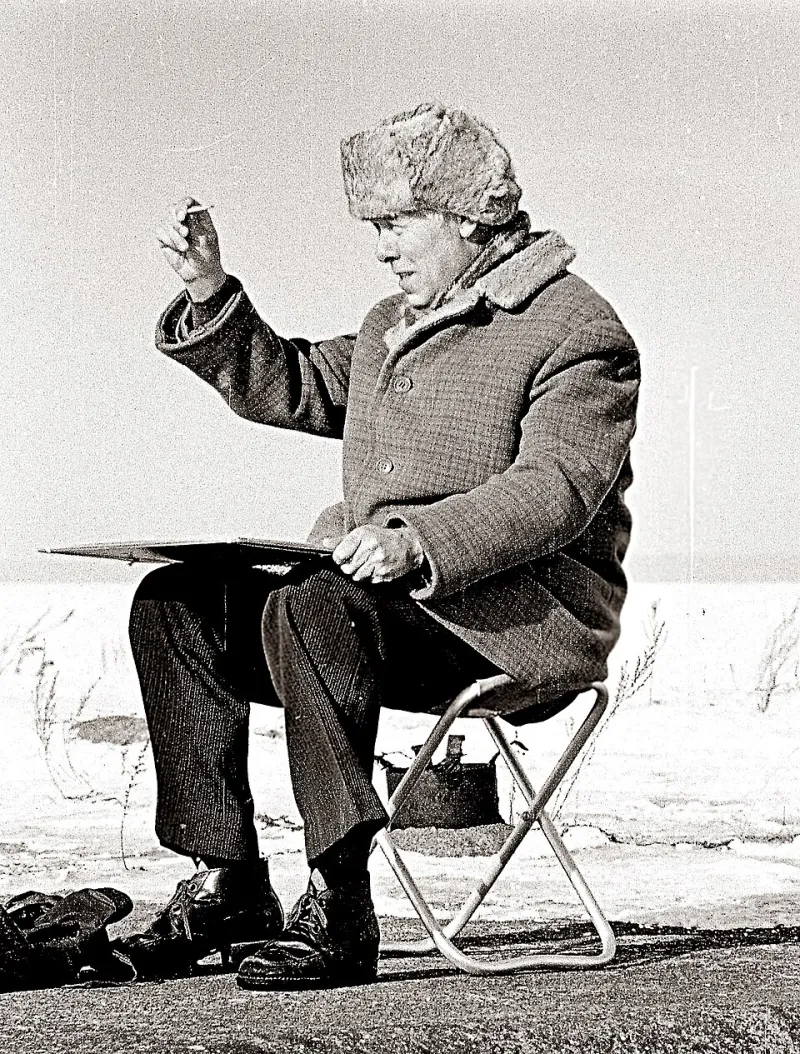
Photo: Vitold Muratov, CC BY-SA 4.0, via Wikimedia Commons
You know the feeling. You open a blank canvas — digital or physical — and instead of ideas flooding in, there's just... static. You've been staring at screens, absorbing other people's work, maybe grinding through client revisions for weeks. The well feels empty. And the advice you keep getting — "just take a break!" or "go find some inspiration!" — sounds great in theory and does approximately nothing in practice.
Here's what's actually happening: your brain isn't just tired. It's overstimulated and under-nourished. There's a difference. And fixing it takes more than a nap.
This is a specific, structured 72-hour reset designed for creatives — illustrators, designers, makers of all kinds — who need to genuinely come back to their work rather than just step away from it for a minute.
Why 72 Hours? The Neuroscience of a Real Reset
Research on cognitive fatigue suggests that meaningful restoration — the kind that actually shifts your baseline — takes longer than most people give it. A single day off rarely clears the backlog. Two days starts to help. Three days, structured intentionally, can create something closer to a genuine perspective shift.
The reason has to do with what neuroscientists call the default mode network — the part of your brain that activates when you're not focused on a specific task. This is where spontaneous creative thinking happens: unexpected connections, sudden clarity, the ideas that arrive in the shower. Constant screen engagement suppresses this network. You need extended time in lower-stimulation states to let it come back online.
Seventy-two hours is also practical. It's a long weekend. It's doable without quitting your life.
Before You Start: The One Rule
This reset only works if you actually disconnect from your usual creative inputs. That means no design Instagram, no Behance browsing, no Pinterest mood boards, no YouTube tutorials. You're not trying to fill the tank with more of the same fuel. You're switching fuel types entirely.
Tell your clients. Set an out-of-office. Do whatever you need to do so you can actually commit to this without the guilt spiral pulling you back in.
Day One: Empty Out
The first day isn't about creating anything. It's about clearing.
Morning: Sleep until your body wakes you up. No alarm, if possible. Eat breakfast without your phone at the table. This sounds small. It isn't. The habit of reaching for a screen first thing is so ingrained for most creatives that breaking it — even once — starts to shift something.
Afternoon: Go outside and walk somewhere without a destination. Not a "productive walk" where you're podcasting or planning. Just moving through space and noticing what's around you. Architecture. Light on a surface. The way a shadow falls across a parking lot. You're not looking for inspiration yet. You're just remembering that the physical world exists and is full of visual information.
Evening: Write in a paper notebook for 20 minutes. Stream of consciousness — no editing, no structure. The goal isn't to produce anything worth keeping. It's to get used to the friction of analog tools and the slowness of making marks by hand.
Day Two: Get Tactile
Day two is where the analog creation begins, and the rule here is that nothing you make has to be good.
Morning: Pull out whatever drawing or mark-making tools you have — pencils, pens, markers, watercolors, whatever's accessible — and spend an hour drawing from observation. Pick an object in your home and draw it five different ways. Not five good drawings. Five different approaches: one detailed, one gestural, one from an unusual angle, one with your non-dominant hand, one where you don't lift the pen.
This exercise isn't about illustration skill. It's about forcing your brain to engage with problem-solving in a low-stakes, sensory-driven way.
Afternoon: Do something that involves your hands but isn't "art." Cook a meal from scratch. Rearrange your bookshelves. Build something out of cardboard. The goal is manual engagement without creative pressure. Your brain is making connections in the background while your hands stay busy.
Evening: Visit a physical space that has nothing to do with design — a natural history museum, a botanical garden, a hardware store, a fabric shop. Bring a small notebook and jot down textures, colors, and shapes that catch your attention. Don't analyze them. Just collect.
Day Three: Let It Come Back
By day three, most people notice something loosening. Ideas start surfacing — not forced, not performed, just arriving. This is the default mode network coming back online.
Morning: Return to your sketchbook, but this time without a prompt. Just sit with it and see what wants to come out. If nothing does, start with a shape — any shape — and let it grow into something. There's no project attached to this. It belongs to no one.
Afternoon: Revisit a piece of work you made that you actually loved — not something recent, something from further back. Look at it without judgment. Try to remember what you were feeling when you made it. Write a few sentences about that.
Evening: Before you return to your normal workflow tomorrow, spend 30 minutes writing down three things you want to feel when you're working — not goals, not deliverables, but emotional states. Curious. Playful. Absorbed. Keep this somewhere visible.
What Happens After
The reset isn't magic, and it won't fix a structural problem — like a workload that's genuinely unsustainable or a client situation that needs a direct conversation. But if your creative block is the kind that comes from overstimulation and under-rest, 72 intentional hours can genuinely shift your baseline.
The point isn't to return to your work with a fresh batch of ideas. It's to return as a slightly different version of yourself — one who's been reminded that making things is a physical, sensory, slow process before it's ever a digital or professional one.
Your sketchpad was waiting the whole time. It just needed you to put everything else down first.