When Does Your Brain Actually Want to Make Things? Finding Your Creative Clock
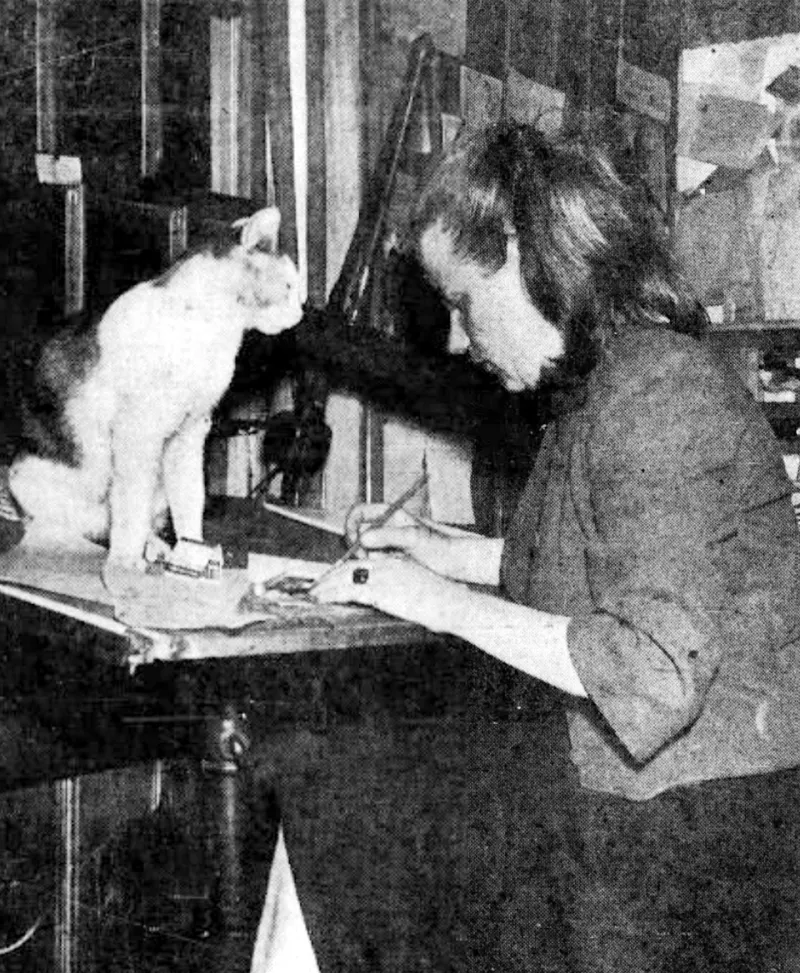
Photo: Cliff Knight, Public domain, via Wikimedia Commons
Somewhere along the way, the creative world absorbed a very specific mythology about how real artists work. They wake before sunrise, they grind in silence while the world sleeps, they produce their best work in the holy hours between 4 and 7 AM. This story gets repeated in podcasts, productivity books, and Instagram captions with suspicious regularity.
But here's the thing: for roughly 30% of people, that schedule is biologically fighting their own brain chemistry. And for a lot of illustrators, designers, and makers who've tried to force themselves into the early-morning mold and failed, the problem was never discipline. It was chronotype.
What Is a Chronotype, Exactly?
Your chronotype is essentially your body's built-in preference for when to be awake, alert, and active. It's regulated by circadian rhythms — the roughly 24-hour biological cycles that govern hormone release, body temperature, and cognitive function — and it's significantly influenced by genetics. This isn't a lifestyle choice. It's more like eye color. You can work with it or against it, but you can't really reprogram it from scratch.
Researchers generally group people into three broad chronotype categories: morning types (sometimes called larks), evening types (owls), and the large middle group that sits somewhere in between. Studies suggest that true morning types and true evening types each make up somewhere around 15-25% of the population, with the majority of people falling in the flexible middle — though still leaning one direction or the other.
The catch is that American work culture, including creative industry culture, defaults heavily toward morning-type schedules. Client calls at 9 AM, studio hours that start at 8, the general cultural messaging that early rising equals seriousness. If your chronotype doesn't match, you spend your peak creative hours in meetings and your most productive potential hours asleep by necessity.
The Neuroscience of Creative Timing
Here's where it gets genuinely interesting for visual creators specifically.
Creative work doesn't just require being awake — it requires very particular cognitive conditions. There are two main modes at play: analytical thinking, which needs sharp focus and executive function, and associative thinking, which is the looser, more free-ranging mental state where unexpected connections get made. Most truly original creative breakthroughs — the weird compositional idea, the color combination you never would have planned, the character design that suddenly feels alive — come from that second mode.
And here's the counterintuitive part: associative thinking often works better when you're slightly tired or in a lower-alert mental state. A 2011 study published in Thinking & Reasoning found that people were actually more creative when working during their non-optimal time of day — because reduced inhibition and looser cognitive filtering let more unusual ideas surface.
This means the relationship between your chronotype and your creative output is more nuanced than "work when you feel sharpest." Morning types might actually do their wildest conceptual sketching in the late afternoon when their analytical guard is down. Night owls might find that the loose, drifty mental state just before their body wants to sleep is when their illustration ideas get genuinely strange and interesting.
Tracking Your Own Patterns
The most useful thing you can do with all of this information is stop theorizing and start observing. Here's a simple two-week tracking practice that a lot of working illustrators have found genuinely eye-opening:
For fourteen days, keep a short log — even just a few lines in your phone's notes app — that records three things each time you finish a creative session: what time you worked, how focused it felt on a scale of 1-5, and a quick gut-check on whether the output felt alive or flat. Don't try to change anything yet. Just collect data.
After two weeks, look for clusters. Most people find that their highest-focus sessions and their most surprising or energized work both tend to group around specific windows. That's your creative clock telling you something worth listening to.
Illustrator and surface pattern designer Keiko, based in Seattle, did exactly this after years of forcing 6 AM drawing sessions because she'd read one too many artist productivity guides. "I had this idea that serious illustrators worked in the morning," she says. "But when I actually tracked my sessions, every piece I loved came out of work I did between 9 PM and midnight. The morning stuff was technically fine but it was kind of dead."
She restructured her schedule to protect those evening hours for generative, exploratory drawing and moved client emails and administrative work to the mornings. Her output volume stayed the same, but the quality of work she was submitting to her portfolio shifted noticeably within a couple of months.
Designing Your Day Around Your Actual Brain
Once you have a clearer sense of your natural rhythm, the next step is intentional scheduling — which, for freelancers and independent creators, is genuinely possible in a way it isn't for people locked into traditional office hours.
The general principle is to match your task type to your energy type:
High-focus analytical work — things like precise technical illustration, detailed typography work, client feedback implementation, or anything requiring sustained accuracy — should land in your peak alertness window, whenever that is for you.
Generative and exploratory work — sketching, brainstorming, loose concept development, trying new approaches — often benefits from slightly softer mental states. This might be your post-lunch dip, your late evening wind-down, or that weird twilight zone right after you wake up before you've fully engaged your analytical brain.
Administrative and communication work — emails, invoicing, social media — can fill the genuinely low-energy gaps when creative output would be forced anyway.
The goal isn't a rigid schedule. It's a loose architecture that stops putting your most important creative work in your worst mental window.
Stop Apologizing for Your Clock
There's a real cultural hangover around creative work schedules in the US. The early-riser mythology gets reinforced constantly, and artists who work best at night often carry a low-grade sense of guilt or inadequacy about it — like they're somehow less disciplined than the dawn-patrol crowd.
But discipline is about showing up consistently and protecting your creative time. It has nothing to do with what hour that time falls on.
Some of the most prolific and original visual artists in history were notorious night workers. Marcel Duchamp. Franz Kafka. Henri de Toulouse-Lautrec. The clock on the wall doesn't determine the quality of what gets made — the alignment between your natural energy and your creative practice does.
Figure out when your brain actually wants to play. Then protect that time like it's the most valuable thing in your schedule. Because honestly? It is.